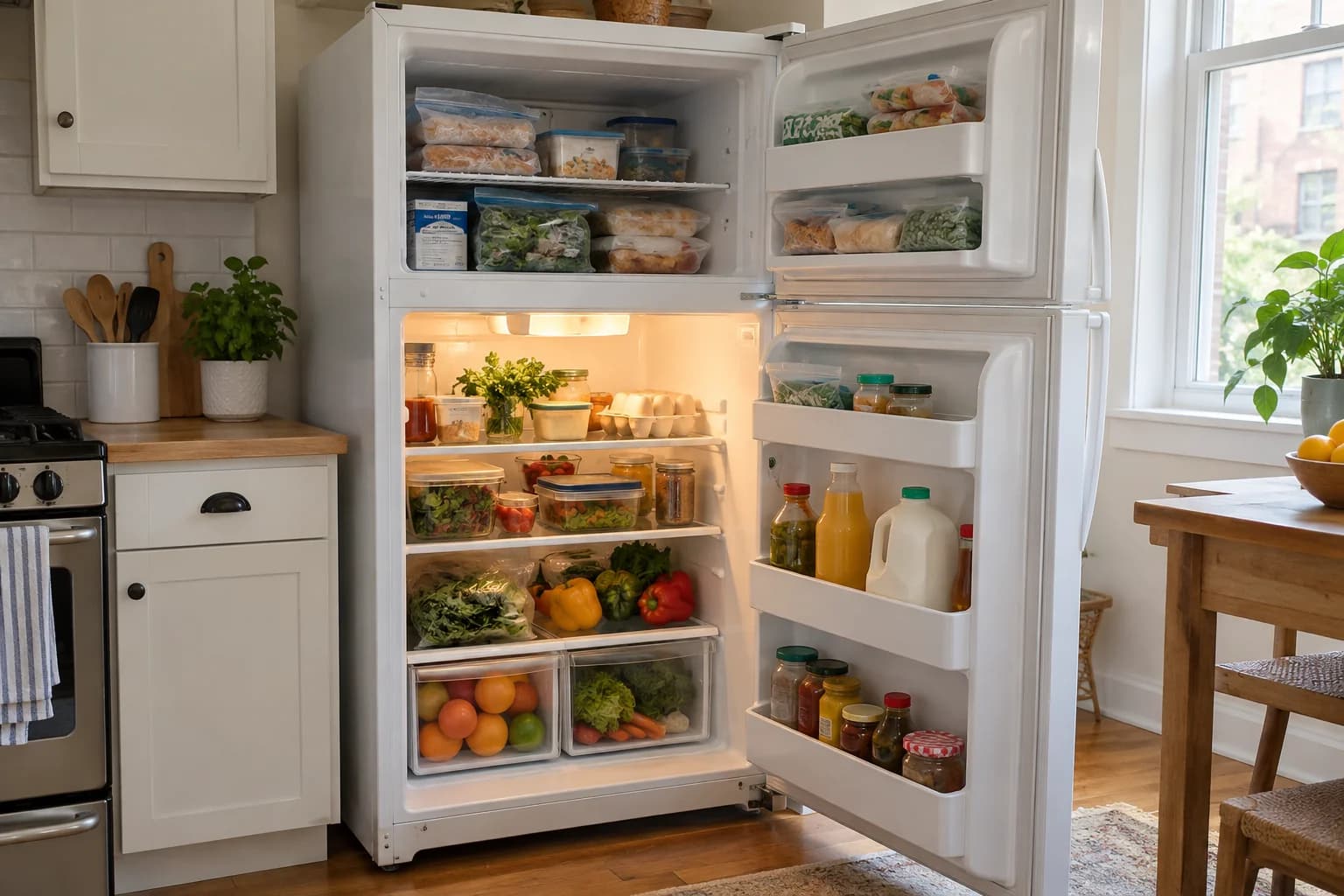
Your freezer still holds frozen food, but the milk in the refrigerator no longer feels cold. Turning the refrigerator dial down may seem like the obvious fix. First, find out whether the fresh-food compartment is actually reaching a safe temperature.
When the freezer is cold but the refrigerator is warm, restricted airflow, a door that does not seal, or a problem in the refrigerator's cooling system can be responsible. The symptom alone does not identify a failed thermostat or tell you which part to replace. Refrigerator designs differ, so the useful first checks are the ones you can make without taking the appliance apart. Whirlpool's cooling guide covers several possible causes.
First, check the temperature and protect your food
Use an appliance thermometer to measure the refrigerator temperature, following the thermometer's placement instructions. Write down the reading and the time. A control panel's selected temperature is not the same thing as an independent measurement inside the compartment.
FoodSafety.gov recommends refrigerator storage at 40°F or below and freezer storage at 0°F or below. Frozen-looking packages do not establish either compartment's actual temperature. If the refrigerator is too warm, arrange suitable cold storage for perishables while you address the problem. Consult the official cold-food storage guidance for individual foods rather than using smell or appearance as reassurance.
Keep the doors closed as much as possible between checks. Avoid repeatedly adjusting the controls while trying to interpret the readings; note any change you make so that you can explain what happened when requesting service.
Why can the freezer stay cold while the fridge warms up?
The two compartments do not always cool in the same way. Some designs circulate cold air between compartments; others have separate evaporators and additional controls. That makes the model number important before anyone recommends a repair.
For example, a Whirlpool service bulletin for specific dual-evaporator models describes a warm refrigerator compartment with normal freezer operation when ice affects the refrigerator evaporator. That is a model-specific example, not a diagnosis for every refrigerator with this symptom.
A service evaluation may need to distinguish an airflow restriction from a fan, defrost, sensor, or control problem. Replacing a thermostat simply because one compartment is warm skips that distinction. If temperature control is your main concern, our guide to refrigerator thermostat warning signs explains the related symptoms.
Four checks you can make without removing panels
1. Give the interior vents room to breathe
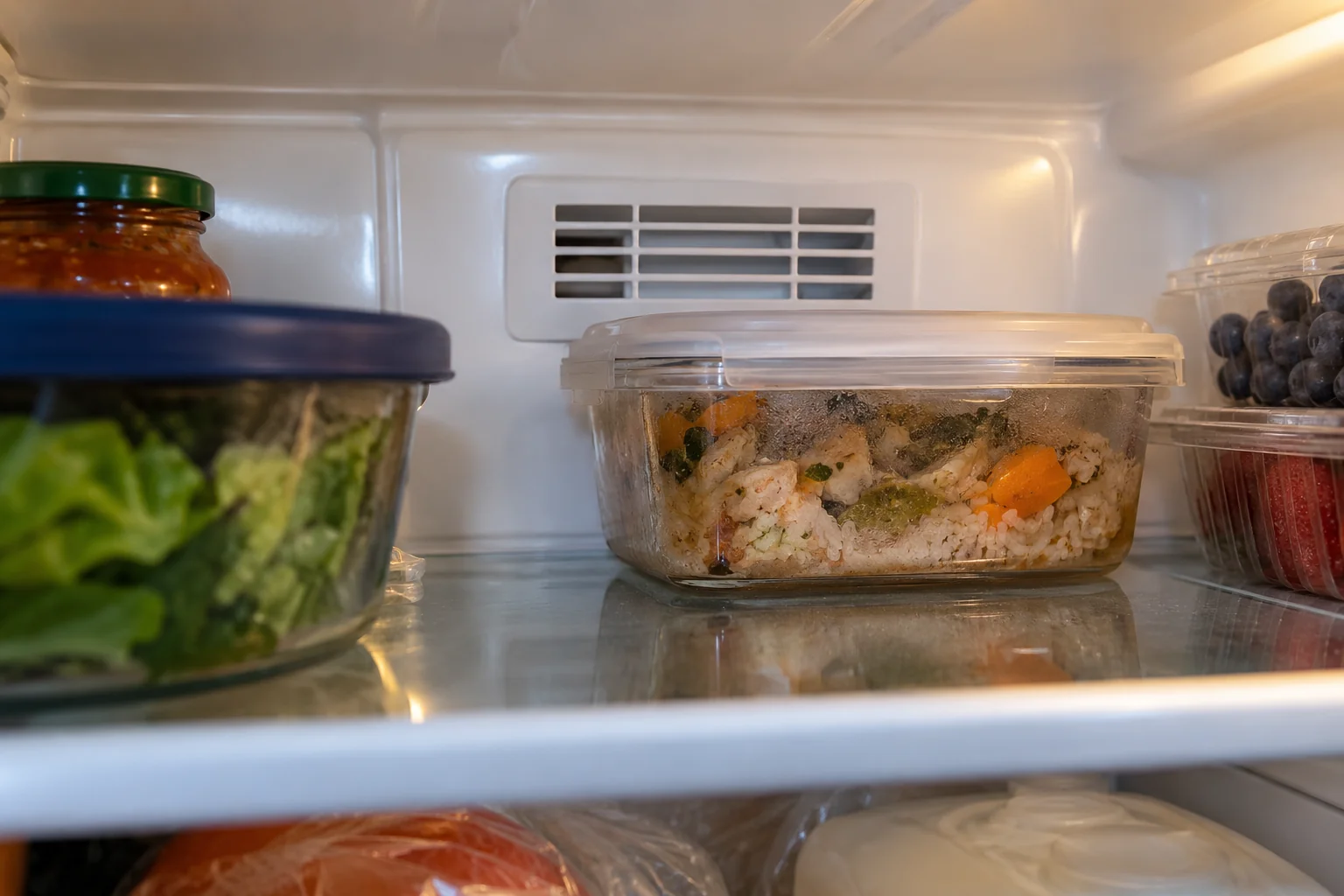
Look for visible air openings inside the refrigerator and freezer. Move food containers, bags, and packages away from them; do not push groceries tightly against the rear wall. Use your owner's manual to identify the vents and the clearance your model needs.
An overfilled shelf can obstruct circulation even when the door closes. Whirlpool's owner's manual guidance on air circulation explains why the openings need to remain clear. Do not poke tools into a vent or remove its cover to investigate.
2. Check whether the door closes and seals
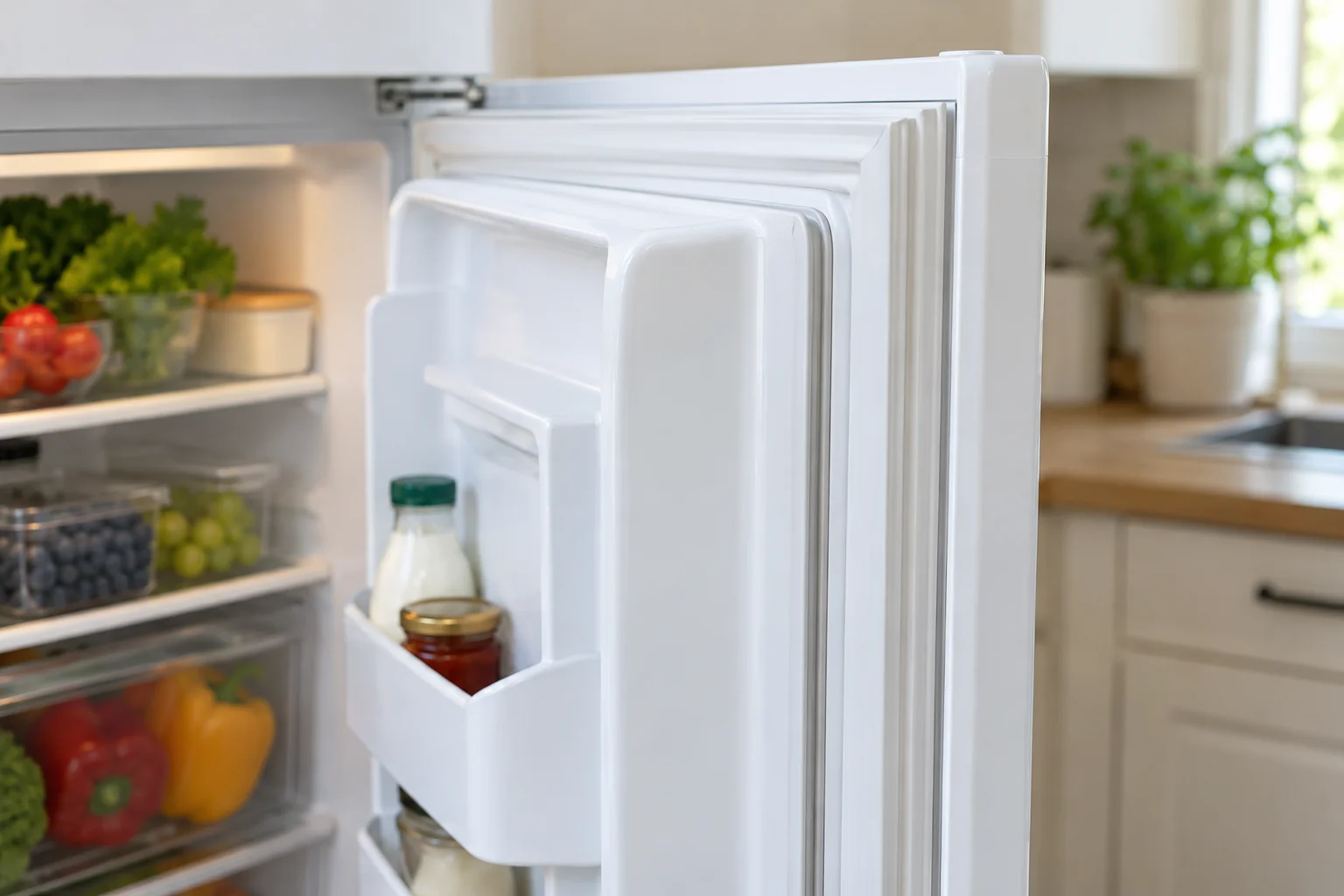
Make sure a drawer, bottle, or shelf is not keeping the door slightly open. Look around the rubber gasket for debris, visible damage, or a section that does not sit against the cabinet. Clean accessible seals according to the manufacturer's instructions.
A door can appear closed while allowing warm air inside. Samsung includes door-seal condition among its refrigerator cooling checks. Report a damaged seal or a door that will not align properly when arranging service.
3. Review the settings for your exact model
Check the refrigerator setting separately from the freezer setting, if your appliance has separate controls. Use the manual to interpret any special modes or messages. Avoid copying a reset sequence from a different model.
After a setting change, follow your manufacturer's guidance on temperature stabilization. Keep perishable food protected during that period; a recommended waiting period for the appliance is not permission to leave food in a warm compartment. If you need help identifying the manual, see how to find and use your appliance's model-specific instructions.
4. Record frost, sounds, and error messages
From the normally accessible interior, note unusual frost around vents or on the back wall. Photograph any displayed error code. Describe a new scraping, clicking, or unusually quiet pattern without trying to force a fan to run.
These observations help explain the symptom. They do not prove which component has failed. Leave interior covers in place, and do not use a knife, hair dryer, or other improvised method to clear hidden ice.
When should you request refrigerator repair?
Request a diagnosis if the fresh-food compartment remains too warm after the applicable owner checks, if frost returns, or if the appliance displays an error or develops unusual noises. If both compartments are warming, report that change too—the original freezer-cold/fridge-warm description may no longer fit.
Before contacting a repair company, collect:
- The brand and model number from an accessible label.
- Measured refrigerator and freezer temperatures, with the times recorded.
- When the problem started and whether it followed a power interruption or setting change.
- Photos of visible frost or error messages, plus the checks you already made.
If the refrigerator is also running almost continuously, our guide to a refrigerator that runs all day covers that adjacent issue.
Refrigerator repair in New York and Yonkers
Triple A Plaza is based in Yonkers and provides appliance repair in New York, with New Jersey service coverage as well. If the freezer is cold but the refrigerator is warm, explain that specific symptom when requesting service.
Visit our refrigerator repair page, call (718) 560-3131, or send a service request with your location, model number, and temperature readings. Those details give the repair request a clearer starting point than a guessed replacement part.
Need help with your appliance?
Our certified technicians serve homes and businesses across New York and New Jersey — one team for both states.